Today we had two young men from the University of Windsor Science Department to help us out with our science experiment. We are part of a large group of schools that are collecting data for a Nasa approved experiment. We are conducting a blind study into whether seeds that are grown in space germinate differently than seeds that have NOT gone to space. The students learned about the Scientific Method and how we come up with a Theory and Hypothesis which we then test. We will be observing the seeds to look for signs of germination and then keep track of which seeds germinate more quickly and produce seedlings.
Monday, 9 November 2015
Wednesday, 4 November 2015
SCIENCE ASSESSMENTS COMING UP NEXT WEEK
GRADE 4 SCIENCE ASSESSMENT
STUDENTS WILL BE SHOWN A SCENE (PICTURE) OF A HABITAT WITH A VARIETY OF DIFFERENT CREATURES AND PLANT LIFE. THEN THEY WILL BE ASKED THESE QUESTIONS.
PART 1
- MAKE A LIST OF THE PRODUCERS AND CONSUMERS IN THE HABITAT
- FROM THE LIST IN QUESTION 1, CREATE 3 DIFFERENT FOOD CHAINS
- IN THE FOOD CHAIN IDENTIFY THE CONSUMERS (HERBIVORES OR CARNIVORES)
PART 2
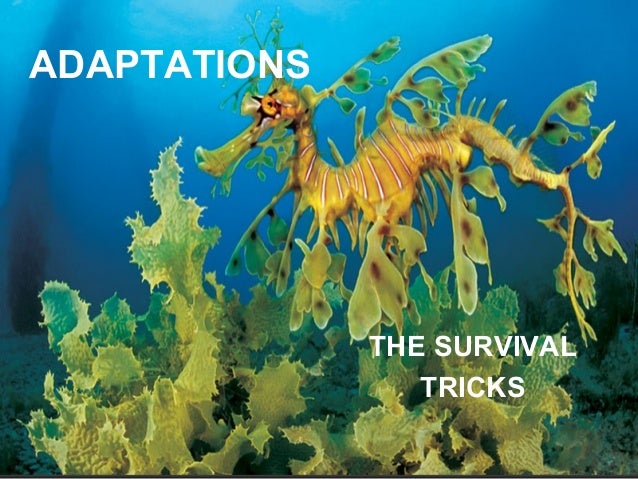
- CHOOSE 1 PLANT AND DESCRIBE THE SPECIAL FEATURES THAT HAVE HELP IT SURVIVE IN THE HABITAT.
- CHOOSE 1 ANIMAL DESCRIBE THE SPECIAL FEATURES THAT HAVE HELP IT SURVIVE IN THE HABITAT.
PART 3
- GIVE TWO DIFFERENT WAYS HUMAN ACTIONS COULD AFFECT THIS HABITAT
GRADE 3 SCIENCE ASSESSMENT
THE GRADE 3 STUDENTS WILL BE TESTED ON THEIR KNOWLEDGE OF THE INFORMATION BELOW.
- BE ABLE TO LABEL A DIAGRAM OF A SIMPLE PLANT AND KNOW WHAT EACH PART DOES. (ROOTS, STEM, FLOWER, LEAVES, SEEDS)
- BE ABLE TO EXPLAIN THE LIFE CYCLE OF A PLANT FROM SEED TO MATURE PLANT THAT CAN PRODUCE SEEDS
- BE ABLE TO EXPLAIN THINGS PLANTS AND ANIMALS NEED TO SURVIVE (WATER, AIR , SUN ETC.)
- BE ABLE TO PICK OUT AND DESCRIBE SPECIAL FEATURES OF PLANTS THAT ALLOW THEM TO SURVIVE IN THEIR PARTICULAR HABITAT ( A MAPLE KEY ALLOWS THE SEEDS OF MAPLE TREES TO SPREAD)
- EXPLAIN WHAT PARTS OF A PLANT CERTAIN FOODS COME FROM (CARROTS ARE ROOTS)
- EXPLAIN HOW PEOPLE USE PLANTS FOR OTHER THINGS THAN JUST FOOD.
- EXPLAIN HOW A FEW WAYS ANIMALS HELP PLANTS.
Tuesday, 27 October 2015
Solving Word Problems is Challenging

The most difficult process for students to master in the primary grades is how to consistently solve word problems. The first issue is usually related to being able to decode Math Terms. The second issue is almost invariably related to not having a strong grasp of basic operations: multiplying, dividing, adding and subtracting. Today we introduced a STANDARD APPROACH to consistently solving word problems. Once children master the steps and learn how to decode math problems they usually aren't as intimidated by word problems.
OURS SYSTEM HAS 4 BASIC STEPS: (SEE PICTURES)
READ
THINK
SOLVE
REFLECT
If you double-click on the picture to the left, it will expand and it will be easier to view. Some key points to remember:
1) read question at least twice (READ SECTION)
2) re-write the question in your words (READ SECTION)
3) LIST all facts and circle key facts (THINK SECTION)
4)pick a strategy from our strategy chart (SOLVE SECTION)
5) MOST CRITICAL-- once you have an answer, does it make sense? ( REFLECT SECTION)
We also have several strategies that we will teach the students along the way. We start with GUESS AND CHECK. we would call this trial and error in our day. The picture on the left show explains GUESS AND CHECK.
FINALLY, today we did a sample problem following all the steps in our Strategy and we showed the students how to use GUESS AND CHECK as a problem solving strategy. We will be practicing the rest of the week with our SAMPLE PROBLEMS.
Thursday, 22 October 2015
LITTLE HELP FROM MY FRIENDS: MATH HELP THAT IS!!
BIG FAN OF THE BEATLES AND THEY HAD IT RIGHT, WE CAN ALL USE A LITTLE HELP FROM OUR FRIENDS!
last week I posted some videos that went through the addition and subtraction standard algorithm. I am attaching a bit of a reminder sheet for students that may need to remind themselves how to complete vertical addition and subtraction. I provided each student with a copy of these pages to insert into their math work book.
Wednesday, 14 October 2015
MATH PRACTICE BUILDS CONFIDENCE AND AUTOMATICITY
I'm sure you have noticed that 2 digit addition and subtraction sheets have been coming home the last few evenings. Well, we have hit a bit of a bump in our math instruction. Students are struggling to remember how to add and subtract two digit numbers. By the end of Grade 2 most students are on their way to mastering this skill. We have been reviewing multiple ways to add two digit numbers. See below for examples. I am including some short videos just after the examples. Review them with your child whenever you have a few minutes. Have them watch by themselves or watch them together.
1) The good old fashioned vertical addition we all love so well
37 or 23
+23 -17
2) Using expanded numbers.
37 = 30 + 7
23 = 20 + 3
=50 + 10
= 60
3) Using manipulatives

1) The good old fashioned vertical addition we all love so well
37 or 23
+23 -17
2) Using expanded numbers.
37 = 30 + 7
23 = 20 + 3
=50 + 10
= 60
3) Using manipulatives
Monday, 5 October 2015
School ThanksGiving Mass
Our class, along with the grade 2 class, will be hosting the Thanksgiving Mass. It will be Thursday, October 8th at 1pm in the school gym. We would love to see as many family members in attendance as possible. Please feel free to call the school if you have any questions.
Mr. Francia
Tuesday, 29 September 2015
TEACHING PLACE VALUE
Place value can be a difficult concept for young children to master. Knowing that numbers vary in value according to where they fall on the place value chart is a critical skill that students must master before they move onto more advanced calculations. In these pictures students are practicing building numbers with manipulatives. Each one of those orange pieces has a specific value. One single cube is called a Unit and represent 1. The Rod is made up of 10 units and has a value of 10. The Flats are made of 10 rows of rods and have a value of 100. Finally, the large cubes are made up of 10 flats and have a value of 1000. Students are given a number that they need to represent with manipulatives and then show that number on a place value chart. I would encourage you to work on place value at home. Write out a large number, for grade 3 up to 999 and grade 4 up to 9999. Have them show you where the ones column, tens column and hundred columns are. Point to a digit in side a large number and have them tell you what it's worth. For example, the digit 9 in the number 290 represents 90 because it is in the tens column. Please call or send me a note if you have any questions regarding Place Value, or any other math concept you would like to review with your child.
Subscribe to:
Posts (Atom)